


The Godfather of BJJ in Vietnam - EN
- The Early Emergence of Brazilian Jiu-Jitsu in Vietnam
The journey of bringing Brazilian Jiu-Jitsu to Vietnam did not begin in stadiums or formal institutions. It emerged quietly through scattered connections around 2006–2010, when Saigon Jiu-Jitsu (SJJ) started to be recognized as the first place where people could train this art in Ho Chi Minh City, and possibly across the entire country.
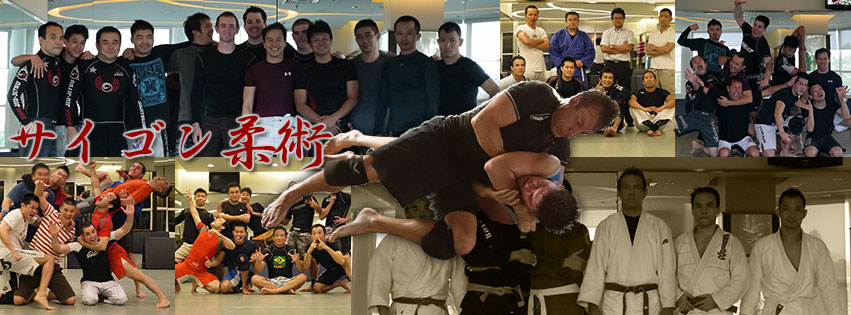
SJJ was unlike any typical martial arts gym at the time. Located inside The Manor, a high-end residential complex in Binh Thanh District, it featured professional Tatami mats, a spring floor system, air conditioning, and clean facilities. This was an unusual starting point for a martial art that is often associated with modest, public training spaces. Yet this environment created the conditions necessary for the first practitioners to stay, train, and grow.
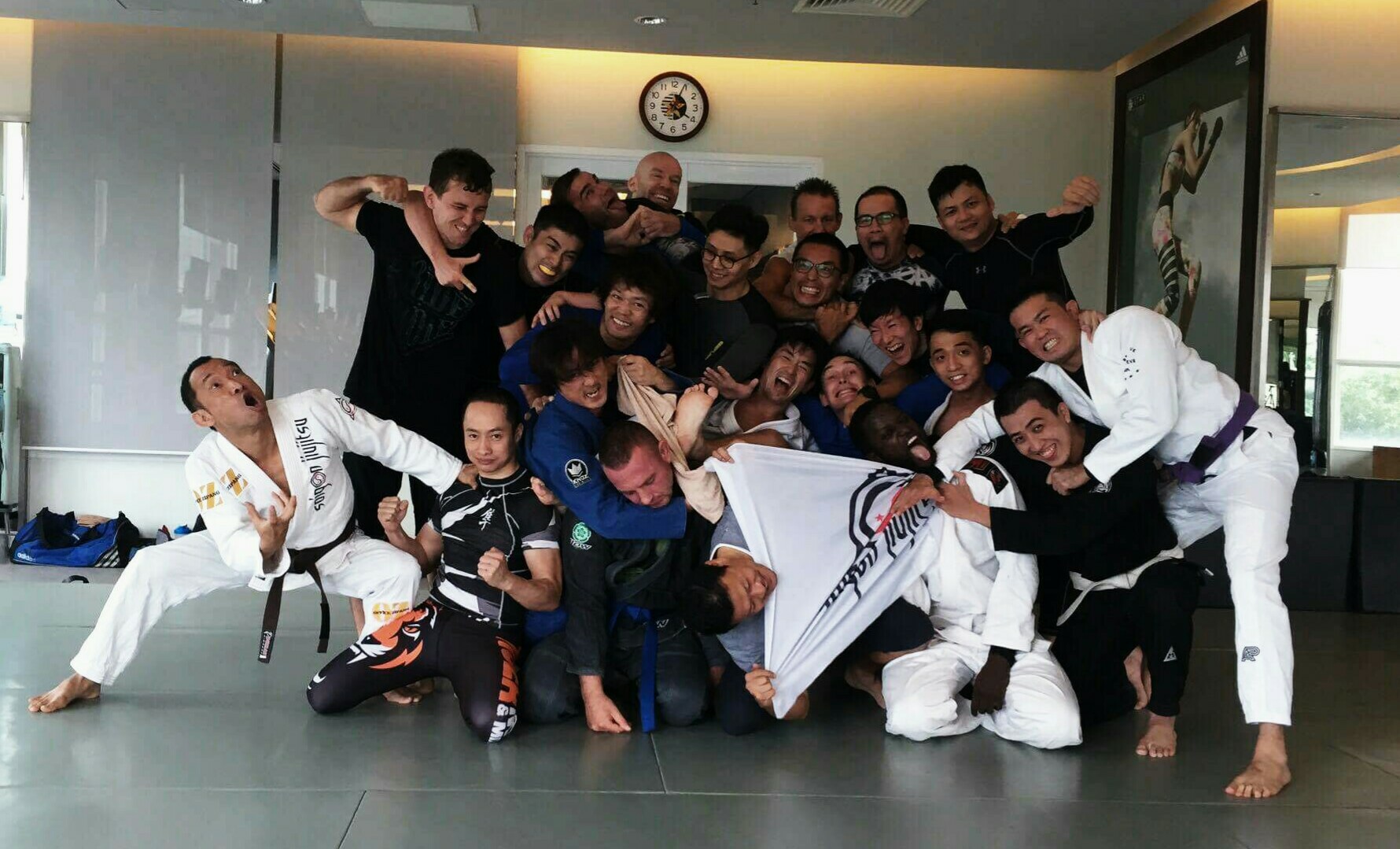
From a small core group, SJJ gradually became a meeting point. Open mats, informal classes, and knowledge exchange sessions were regularly held, with coaches from Japan, the United States, Russia, and Vietnam contributing. There was no formal system or standardized curriculum, only curiosity, discipline, and a shared intent to learn and exchange knowledge.
- Steven Chipman and the Foundation of Saigon Jiu-Jitsu
During this formative period, one individual consistently stood at the center of this ecosystem: Steven Chipman. Within the early SJJ community, he was not only an organizer or connector but the person who created the conditions for Jiu-Jitsu to exist in Vietnam. Many referred to him as the "Godfather of BJJ in Vietnam".

Mr. Steven Chipman the "Godfather of BJJ in Vietnam"
Born in Norwood, Massachusetts, Steven grew up in a family with a strong martial arts background. He was introduced to Boxing and Judo Newaza at a young age. These early experiences shaped his perspective, turning training into a way of life rather than a temporary interest. At the age of 22, he entered the fitness industry and remained in it for more than 40 years.
He moved to Japan in 1991 and later settled in Vietnam in 1996. Despite his long martial arts background, his first exposure to Brazilian Jiu-Jitsu happened in Vietnam, when a visiting black belt demonstrated techniques during a training session. That moment fundamentally changed his understanding of grappling and motivated him to pursue Jiu-Jitsu more seriously.
Before SJJ was established, Sofitel Hotel (1998 ~ 2006), where Steven managed the fitness center, unintentionally became the first gathering place for grappling enthusiasts in Saigon. It was not a formal academy, but simply a place where like-minded individuals found each other.
Later, when he was invited by Bitexco to manage the Star Fitness system, Steven was directly involved in the development of the facility. The original design included a space for yoga and martial arts. That space eventually became Saigon Jiu-Jitsu, widely considered the birthplace of BJJ in Vietnam.
- The Community and Early Contributors
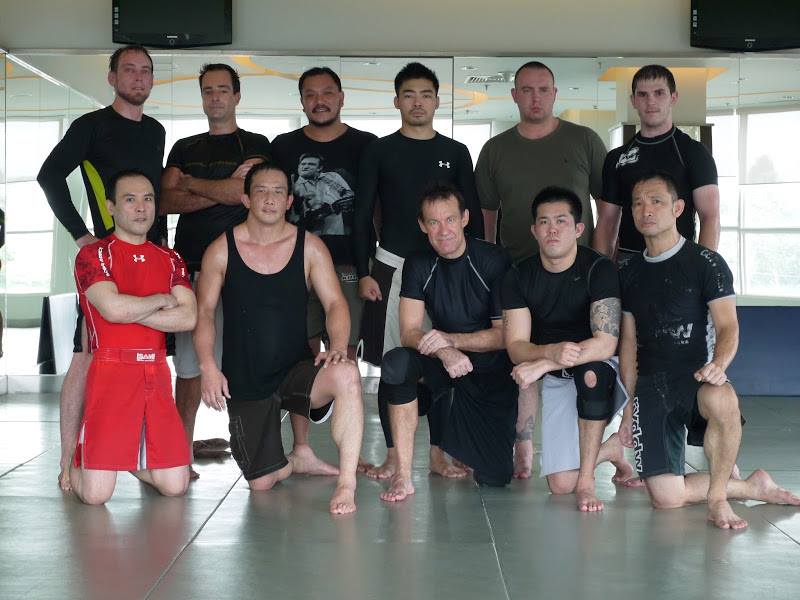
The early members of SJJ were not primarily professional athletes. They came from diverse professional backgrounds, including business, engineering, medicine, education, and aviation. They chose Jiu-Jitsu as a method of training both body and mind, developing adaptability, resilience under pressure, and decisiveness.
Without a formal curriculum, members learned independently, researched techniques, and shared knowledge with one another. Many of them were expatriates living and working in Vietnam, united by a common goal of building a Jiu-Jitsu community and introducing the art to a wider audience.
According to Mr Steven Chipman among those who contributed to spreading grappling in Vietnam were Patrick Nguyen, Matt Fujieki, Igor Tatarinov, Erik Koehne, Kotani Hisanori, Pham Dung, Tomo Suerte, Joe Deka, Caleb Jones, Cory Ou, Duc Tuan, and David Minetti.
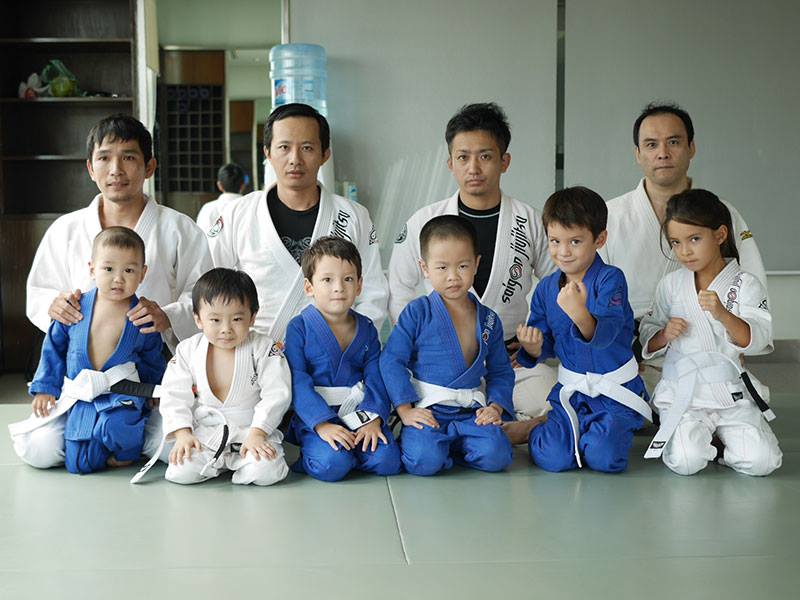
Several important milestones also emerged from this ecosystem. These included some of the first blue and purple belts in Vietnam, as well as early Jiu-Jitsu classes for children led by Tomo Suerte, who brought a disciplined, traditional Japanese teaching style to weekend sessions.
- Philosophy of Training
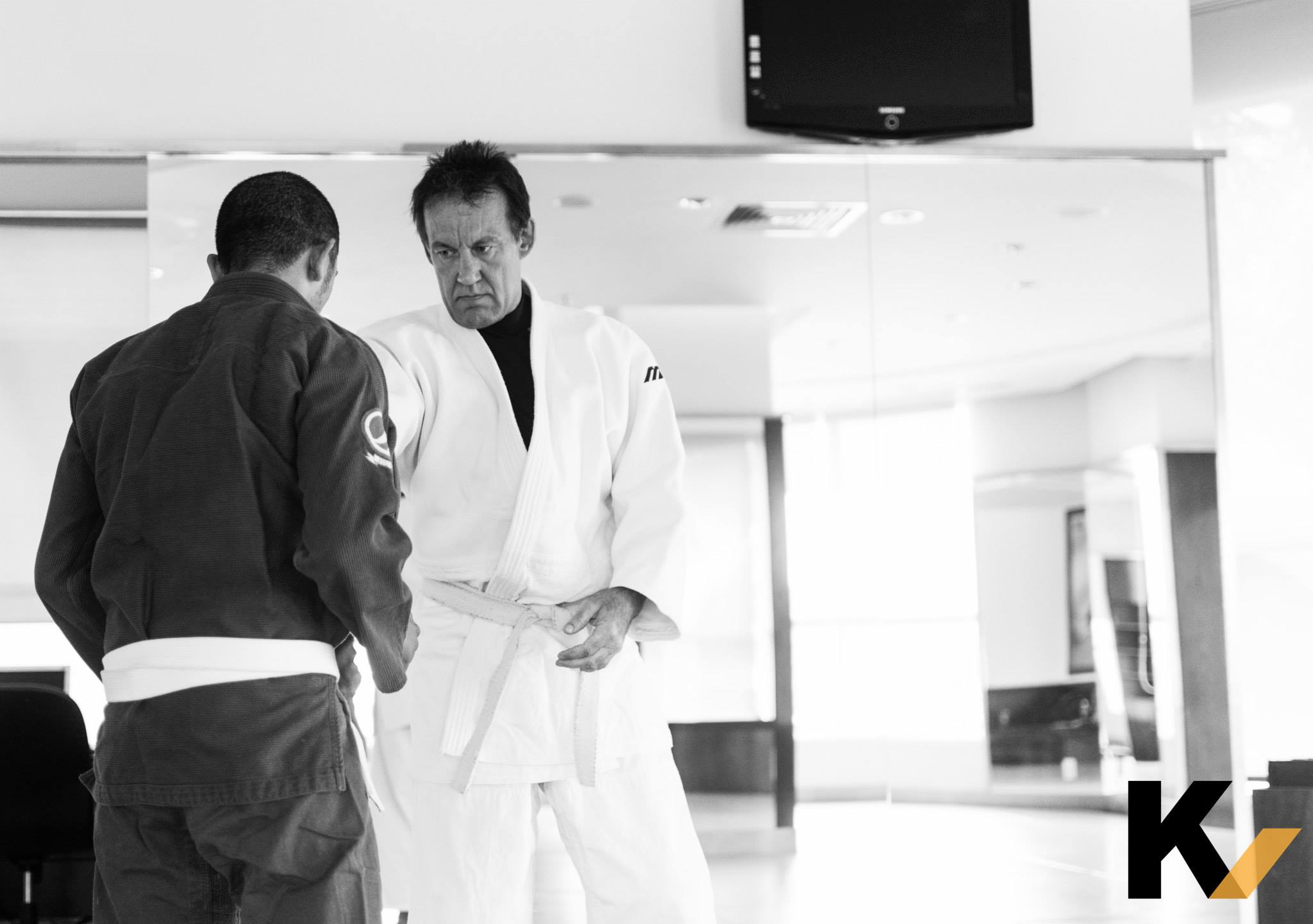
Steven’s training philosophy differed from conventional approaches. Having trained in Boxing and No-Gi grappling, he placed little importance on belts or external recognition. Instead, he emphasized maintaining an open mindset, continuously learning regardless of rank, and valuing the training experience itself.
From his decades in the fitness industry, he viewed training as a system. Long-term health requires a balance between strength, flexibility, and proper nutrition. Longevity in training is not achieved by intensity alone but by sustainability.
- TheGIS and Saigon Jiu-Jitsu
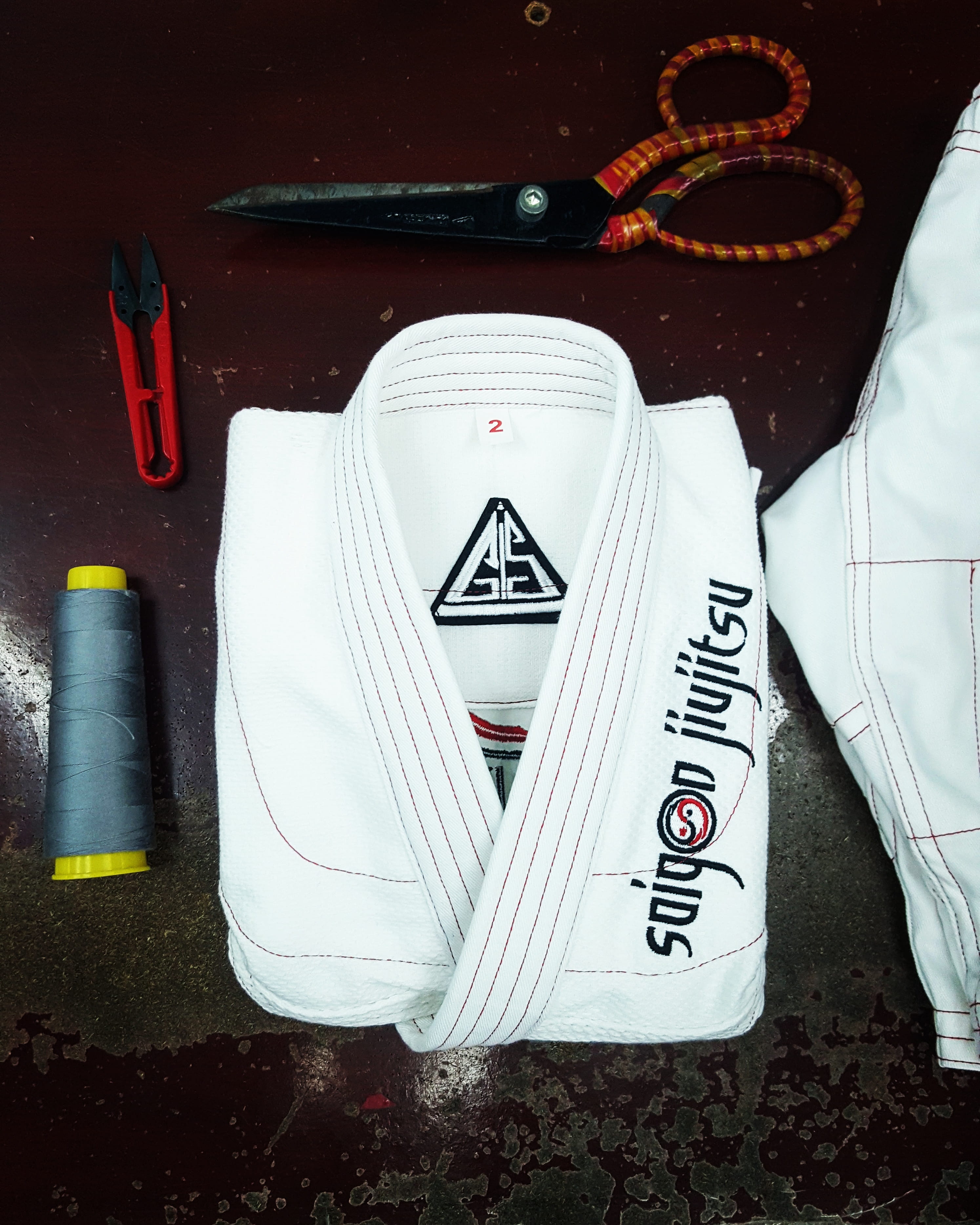
As Saigon Jiu-Jitsu grew, the need for proper uniforms became evident. This is where TheGIS entered the picture. The brand worked alongside SJJ to produce some of the earliest Jiu-Jitsu uniforms in Vietnam, using this opportunity to experiment, refine designs, and align with IBJJF standards.
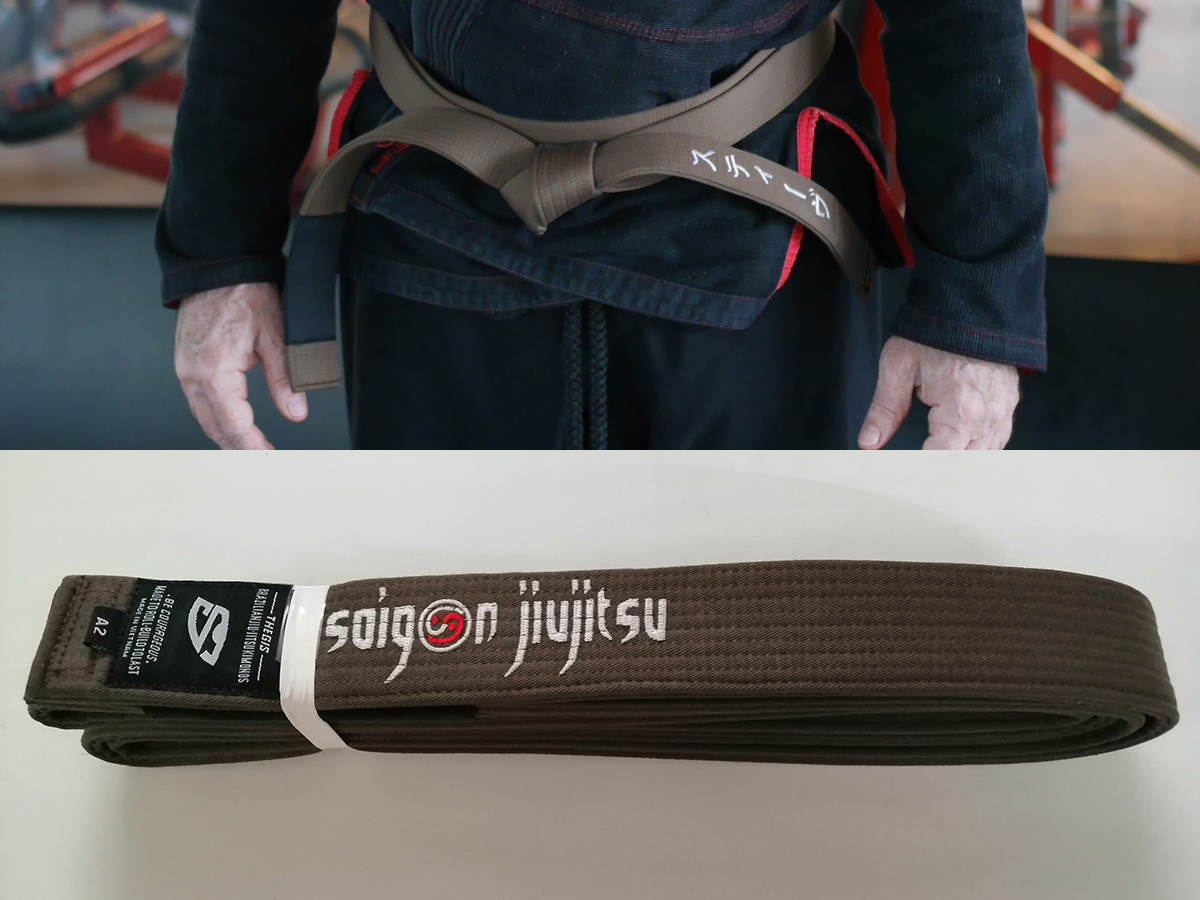
Between 2015 and 2022, practitioners in Vietnam were highly familiar with Jiu-Jitsu uniforms embroidered with the SJJ logo. These uniforms became more than just equipment; they represented a specific chapter in the early development of Brazilian Jiu-Jitsu in Vietnam.
- Legacy and Continuation
What began as a small, undefined group of individuals training without structure has since evolved into a nationwide community. Today, Brazilian Jiu-Jitsu in Vietnam is no longer difficult to find. Academies exist across major cities, structured programs are in place, and a new generation of practitioners is growing within a system that did not exist before.
Yet the foundation of that growth traces back to a specific time, a specific place, and a small group of people who chose to train without certainty. Saigon Jiu-Jitsu was not built on scale or visibility, but on consistency, openness, and the willingness to share knowledge without expectation.

Steven Chipman’s role was not defined by titles or achievements, but by the environment he helped create. An environment where people could meet, train, and gradually shape something larger than themselves.
TheGIS, having been part of that early stage, carries a direct connection to that origin. Not as an observer, but as a contributor to the process of building, testing, and refining what Jiu-Jitsu would become in Vietnam.
The result is not a finished story. Saigon Jiu-Jitsu has now close and Mr Steven Chipman has retired from work (He still train twice a week) but the Story of "Saigon Jiu-Jitsu" is just getting started.


